Google rolled out more named updates in 2025 than in any previous year. If your traffic dropped (or surged) without warning, an algorithm update was probably involved. This guide unpacks what each major 2025 update actually changed, what kind of sites it hit, and the concrete steps you can take this week to stabilise rankings.
Google ran at least seven confirmed algorithm updates in 2025: two core updates, two helpful-content tune-ups, a major link spam update, and several smaller refreshes. For most site owners, the experience has been the same: traffic moves up or down sharply, the SERPs reshuffle, and Google publishes a vague blog post that doesn't tell you exactly what to fix.
I've worked through these cycles with about thirty client sites this year. The pattern is becoming predictable. The sites that recover quickly are doing the same handful of things; the sites that keep losing rankings are repeating the same handful of mistakes. This guide walks through both lists.
What "ranking stability" actually means
Stability isn't the same as ranking #1 forever. Google reshuffles results constantly — even between page refreshes, the same query can show different results based on personalisation, geography, query history and freshness signals. Stability means your average position stays roughly the same week after week, your share of voice for target keywords doesn't collapse during updates, and your traffic recovers within a reasonable window after dips.
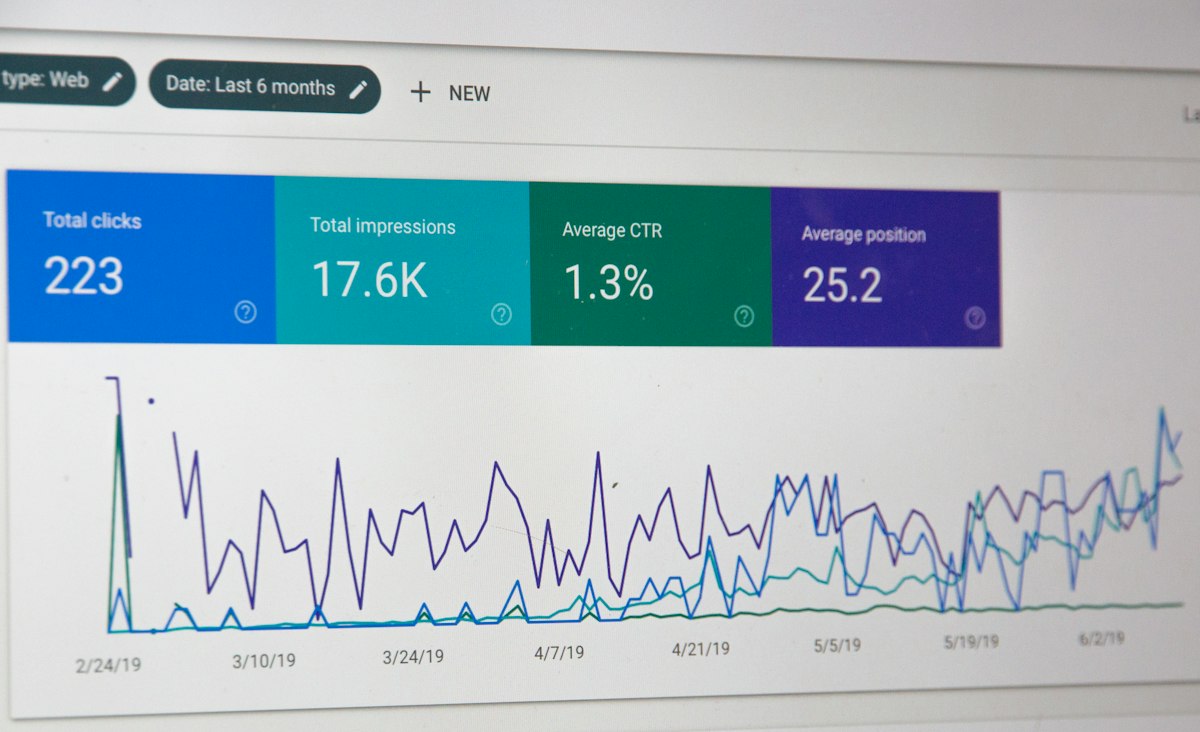
The single best way to track this is the Performance report inside Google Search Console. Filter by date range, compare 28-day windows, and watch for sudden drops that align with confirmed update dates from the Google Search Status Dashboard. If your dip lines up with an update window, you've identified a likely cause; not just bad luck.
The 2025 updates that mattered most
March 2025 Core Update
This was a big one. Google rolled it out over 14 days and explicitly mentioned that it was reducing the prevalence of unhelpful, unoriginal content in search results by 40%. Sites that had been running heavy AI-generated content with thin editing took the worst hits. The recovery path is the same as for any core update: improve content quality, double down on first-hand expertise, and remove or rewrite the weakest 20% of pages.
June 2025 Helpful Content tune-up
The helpful-content system stopped being a separate "update" in late 2024 and got merged into the main ranking algorithm. The June 2025 tune-up was a calibration pass that hit "people-also-ask farms". Sites that auto-generated thousands of pages targeting tail-end question queries. If you grew traffic in 2024 by spinning up programmatic Q&A content with no original insight, June was a rough month.
September 2025 Link Spam Update
Google's SpamBrain system got significantly better at identifying paid-link networks and PBNs (private blog networks). Sites with manipulative backlink profiles got two outcomes: either Google neutralised the spammy links (best case) or applied a manual action (worst case). If your domain got demoted around late September, run a fresh backlink audit and submit a disavow file.
November 2025 Core Update
The most recent confirmed update. The pattern: review-style content, comparison articles, and "best of" listicles that didn't include genuine first-hand testing got pushed down. Google's November update notes specifically called out content that "doesn't show evidence of expertise or being personally tested by the author."

Common reasons sites lose rankings during updates
- Thin content. Pages under 300 words with no unique insight, no images, no examples. Google's quality classifiers got dramatically better in 2025 at flagging these.
- AI-generated content with no human polish. ChatGPT-style prose with telltale phrases like "these days" and "working through" gets identified within a few crawls.
- Duplicate or near-duplicate content. This includes scraping content from manufacturers, syndicating press releases without rewriting, and creating multiple landing pages that target slightly different keywords with 90% identical content.
- Bad outbound links. Linking out to spammy domains can drag your reputation down. Use the website link analyzer tool to audit your outbound profile.
- Slow page speed. Core Web Vitals became a stronger ranking factor in mid-2025. Pages where the Largest Contentful Paint exceeds 2.5 seconds on mobile rarely rank well anymore.
- Unhealthy link profile. Too many low-quality inbound links, especially from sites with high spam scores, will eventually catch up to you.
What actually moves rankings back up
The recovery playbook hasn't changed in years. What changes is which areas need the most attention.
Audit and prune low-value pages
Look at your pages that haven't received an organic visit in 90 days. Most sites have between 15% and 40% of pages in this bucket. Either rewrite them with genuine value or noindex them. Google's quality classifiers look at the site as a whole — a few hundred thin pages can drag down your strong ones. The free SEO score checker on this site flags the most common on-page issues across any URL.
Add genuine first-hand experience to existing content
This is the single biggest lever in 2025. Take an article that ranks on page two or three and add: a personal anecdote about how you used the technique, a screenshot from your own dashboard, a specific result you achieved, your honest opinion about what didn't work. Google's E-E-A-T signals (Experience, Expertise, Authoritativeness, Trust) heavily reward this. The November 2025 update made this even more important.
Speed up the site
Run Google PageSpeed Insights on your top 10 traffic-driving pages. Anything below 75 on mobile is a problem. Common fixes: defer non-critical JavaScript, compress images to WebP, lazy-load offscreen images, remove unused CSS, and switch to a faster theme or hosting provider. The page speed test tool gives you a quick raw response-time check before you run a full Core Web Vitals audit.
Clean up the link profile
Run a backlink audit. Identify any inbound links from sites that look spammy (gambling, adult content, automated networks, sites with no real traffic). Disavow them through Search Console if you can't get them removed organically. Read Google's official documentation on disavowing links — it's the only authoritative source.
Update meta titles and descriptions
If your CTR has dropped on important keywords, your titles and descriptions probably need refreshing. Look at the queries Google shows you in Search Console, then rewrite titles to match user intent more directly. Use the meta tag generator to compose clean, length-optimised tags.
How long does recovery take?
Most clients see partial recovery within 2–4 weeks of substantial improvements, and full recovery within 6–12 weeks. There's a catch: Google doesn't reset its evaluation of your site on every crawl. The negative signals from the original update need time to age out as your improvements accumulate. Don't expect a Monday morning where everything snaps back.
If you've been hit hard by an update, here's the cadence I recommend:
- Week 1: Audit the worst-hit pages. Identify what changed structurally on your site (content patterns, link patterns, technical health).
- Week 2-3: Rewrite the bottom 20% of pages with first-hand experience and stronger expertise signals. Improve page speed where it's clearly weak.
- Week 4-6: Pursue 2-3 high-quality backlinks from genuine industry sources. Update internal linking to flow authority into your most important pages.
- Week 8-12: Re-measure. If you're not seeing meaningful improvement, the issue is likely deeper. Content quality or site reputation rather than quick technical fixes.
How to prepare for the next update
You can't predict what Google will change, but you can make sure each update is more likely to help you than hurt you. The sites I've watched stay stable through every 2025 update share a few habits.
They publish less, but better. One genuinely useful 2,000-word post per week beats five thin 500-word posts. Quality consistently outperforms quantity in 2025.
They get cited as a primary source. Original research, custom case studies, screenshots from real client work, photographs they took themselves, anything Google can identify as first-hand expertise becomes a moat against competitors using AI to scale up cheap content.
They monitor the basics relentlessly. Search Console open every morning. Core Web Vitals checked weekly. Backlink alerts set up. New posts indexed within hours, not days. The Google index checker gives you a fast site: query for any domain to verify Google has the latest count of indexed pages.
They diversify traffic. Email subscribers, social distribution, direct traffic, branded search, none of these are at the mercy of a single algorithm update. If 80% of your traffic comes from organic Google search, you're one bad update away from a crisis.
Tools I use during update recovery
A short list of the tools I keep open when investigating an update-related drop:
- Google Search Console — the source of truth for Google's view of your site.
- Ahrefs Site Explorer (paid, worth it) — backlink history and competitor comparison.
- PageSpeed Insights — the only Core Web Vitals report Google itself trusts.
- WHOIS / RDAP lookup on this site to verify domain history when you suspect a site might have a checkered past.
- DNS lookup for checking whether MX, A and NS records have changed unexpectedly during the audit window.
- The internal keyword density checker and meta tags analyzer to audit pages individually.
Common questions I get asked
Should I rewrite pages that lost rankings, or just delete them?
It depends on the page's potential. If the topic is genuinely valuable to your audience and you can add real expertise, rewrite. If the page was created purely for SEO with no real value, delete or noindex. Don't keep weak content alive hoping it'll recover.
Do internal links still help recovery?
Yes, internal linking is one of the few things that's consistently rewarded by every Google update of the last five years. Make sure your most important pages have at least 5–10 contextual internal links pointing to them from other relevant pages on your site.
Is AI content automatically penalised?
No, but unedited AI content almost always is. Google's stated position is that AI-generated content is fine as long as it's helpful, original, and demonstrates genuine expertise. In practice, that means using AI as a draft assistant, not as a publishing pipeline.
What if the drop happened without an update?
Possible causes: technical issue (suddenly noindexed), manual action (check Search Console), seasonal trend, competitor improvement, or simply a normal SERP fluctuation. Investigate in that order before assuming it's a quality issue.
Final thoughts
Algorithm updates feel scary, but the pattern is consistent: Google keeps rewarding sites that genuinely help readers and keeps demoting sites that game the system. Get the basics right — useful content, healthy technical foundation, real expertise — and most updates are net positive. The sites that get hammered are usually the ones cutting corners.
Need help applying this to your own site? I'm Shani Maurya — a freelance web developer and digital marketer based in Delhi. If you'd like a hands-on audit or full implementation, get in touch — I usually reply within a few hours.

